 Synesseration
Synesseration
Synesseration
A Critical Reflection on Conceptual Assimilation, Heideggerian Mitsein, and Responsible Development
2026-08-25

Rev. Michel Rouhana, PhD, Antonine Order
Attaka’on Between Foundational Integrity and Instrumentalization
A Critical Reflection on Conceptual Assimilation, Heideggerian Mitsein, and Responsible Development
Rev. Fr. Michel Rouhana, O.A.M., PhD
Creator of the Attaka’on Concept (Synesseration) and Architect of its Philosophy
Every new conceptual construct faces a decisive test after its birth. Once it leaves the hands of its founder and begins to circulate among scholars, readers, and institutions, it becomes open to interpretation, comparison, extension, and application in fields that may not have been present at the moment of its original formulation. This is not a weakness but a sign of life. A concept that cannot travel remains enclosed within the circumstances of its birth.
Yet travel also creates a risk: the term may spread more rapidly than the conceptual architecture it carries. A word may become familiar before its inner structure has been assimilated. Instrumentalization begins when a concept is used for explanatory, comparative, ideological, or argumentative purposes before its constitutive elements have been adequately understood. This need not arise from bad faith. It may result from enthusiasm, premature expansion, or the temptation to make a promising concept explain more than its foundational structure can sustain.
Attaka’on must therefore be approached through the distinction between expansion and displacement. Its development is welcome; its identity, however, should not disappear in the process.
I. The Foundational Structure of Attaka’on
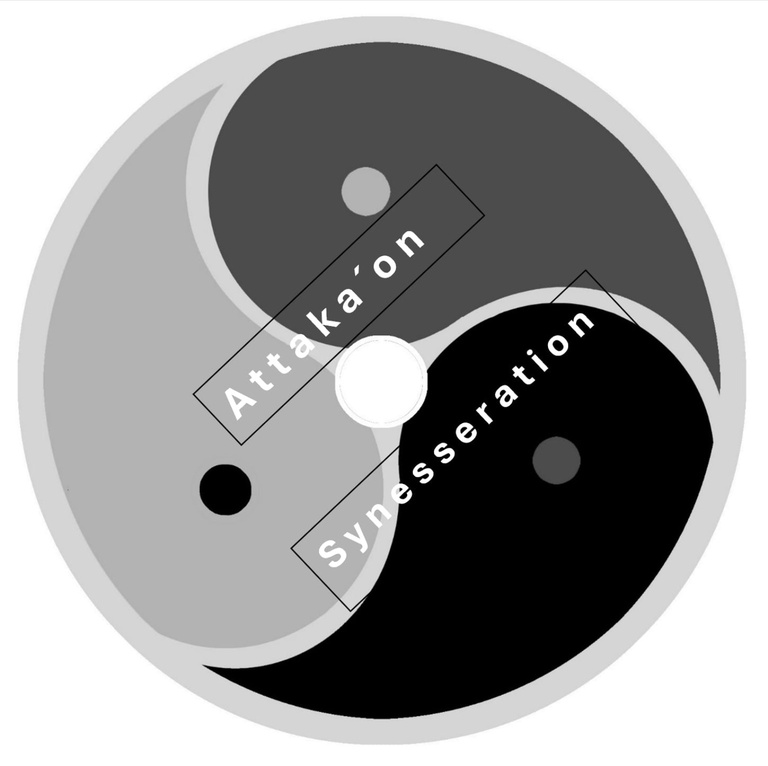
Attaka’on is not a synonym for coexistence, dialogue, solidarity, cooperation, or social harmony. It is an ontological concept concerning the formation and growth of the self in relation with the other, within a horizon of reciprocal necessity, human dignity, the common good, and openness to an Ultimate Other.
Its foundational definition is:
“Attaka’on is an ontological interdependence and synergy between the ‘I,’ the other, and an Ultimate Other, grounded in reciprocal necessity, and giving rise to the formation of a dynamic and ever-renewed ‘we’ that safeguards the common good and human dignity.”
Each element is constitutive: the “I,” the other, an Ultimate Other, reciprocal necessity, ontological interdependence and synergy, the dynamic “we,” the common good, and human dignity. If one of these is removed or reduced to a decorative addition, we may still be using the word Attaka’on while no longer speaking from within its foundational architecture.
This is why the question is not simply whether Attaka’on describes “relationship.” Almost every relational philosophy does. The more precise question is: what kind of relation is at stake, and what does that relation do to the being and growth of the self and the other?
II. Attaka’on and Heideggerian Mitsein
For international philosophical discussion, one of the most important comparisons is with Martin Heidegger’s Mitsein, or “being-with.”
In Being and Time, Heidegger decisively rejects the image of an isolated Cartesian subject and argues that Dasein is constitutively being-with others. Mitsein is not an accidental social relationship subsequently added to an already complete individual. It belongs to the ontological structure of being-in-the-world. Indeed, even solitude is possible only because being-with is already constitutive of Dasein. Heidegger thereby establishes an ineliminably social dimension of human existence: the human being does not first exist as a self-contained “I” and only afterward encounter others, but always already inhabits a shared world. (Being and Time, §§26–27.) (plato.stanford.edu)
Attaka’on recognizes the importance of this philosophical breakthrough, but it does not stop at Mitsein.
Mitsein describes an existential-ontological condition: human existence is always already with others. Attaka’on seeks to articulate a further movement: how the “I” and the other, without losing their distinction, may enter a creative ontological communion in which each participates in the other’s growth in being and in the emergence of a living “we.”
The distinction may therefore be stated succinctly:
Mitsein tells us that the human being is already being-with; Attaka’on asks what this being-with can become when reciprocal necessity, responsible relation, mutual self-giving, and the common good are consciously assumed.
A second distinction concerns the character of the collective. Heidegger’s analysis of everyday being-with also includes das Man, conventionally translated as “the they”: the anonymous social field of shared norms, practices, expectations, and standards through which everyday Dasein already understands and conducts itself. (plato.stanford.edu)
The Attaka’onian “we” is not such an anonymous collectivity. Nor is it a fusion in which personal identity disappears. It is a dynamic relational achievement in which the “I” remains “I” and the other remains genuinely other, while both become capable of generating a common good that neither could produce in isolation.
There is also a third and fundamental structural difference. Attaka’on is not exhausted by the relation between the “I” and the other. Its architecture is explicitly triadic: I + other + Ultimate Other.
The Ultimate Other is not merely a third participant numerically added to two others. It is the horizon that prevents the relation from closing upon itself in mutual interest, tribal solidarity, domination, ideological conformity, or temporary alliance. In its philosophical formulation, the Ultimate Other remains open as an absolute horizon of truth and good; in theological application, it may be named God.
This comparison should not be used to diminish Heidegger. Mitsein remains indispensable precisely because it shows that sociality is not an external supplement to existence. Attaka’on makes a different and additional claim: relationality is not only constitutive; it may become creative, fruitful, and ethically responsible, generating a “we” that enriches persons without dissolving them.
Attaka’on therefore does not simply repeat Mitsein. It makes a difference.
III. Foundational Attribution and Intellectual Rights
Once a concept enters intellectual circulation, it becomes open to criticism and development; it does not become anonymous.
Attaka’on has a founder, foundational texts, and a referential definition. Its circulation does not abolish the founder’s intellectual and moral right to attribution, nor does it convert its constitutive elements into interpretive common property that may be redefined without reference to their sources.
Any question concerning what Attaka’on originally means, what belongs to its definition, its semantic boundaries, or what falls inside or outside its structure therefore requires, as a matter of scholarly method, a prior return to its founder and foundational texts.
This is not a claim to authority over other scholars’ ideas. It is a necessary distinction between two questions:
What does Attaka’on mean in its foundational formulation?
and
What is a later interpreter adding, modifying, or proposing?
The second question belongs fully to the freedom of research. Scholars may criticize Attaka’on, compare it with Heidegger, Buber, Levinas, African relational ontologies, theological anthropology, social ontology, or other intellectual traditions. They may identify implications that its founder has not yet developed.
But epistemic integrity requires that the original concept and the later development remain distinguishable.
This becomes especially important in the age of artificial intelligence. AI can generate associations, parallels, and conceptual comparisons at unprecedented speed. Yet speed of association is not depth of understanding. A system may place Attaka’on beside numerous philosophical traditions within seconds; deciding whether those comparisons respect the concept’s foundational architecture remains a work of critical scholarship and discernment.
IV. Awareness, Assimilation, and Development
Awareness of a concept is not yet assimilation of it.
A reader may recognize Attaka’on as a new term and appreciate its capacity to move beyond expressions such as coexistence or cooperation. But assimilating the concept requires entering its internal logic.
Why is the other not simply an external partner? Why does reciprocal necessity matter? Why must the relation remain open to an Ultimate Other? What kind of “we” emerges? And how does this “we” enrich rather than erase personal identity?
A concept must, so to speak, be lived with intellectually.
Awareness opens the door; assimilation teaches us how to enter.
This distinction also separates development from dissolution.
Development carries Attaka’on into a new field while remaining able to demonstrate continuity with its foundational structure. Dissolution retains the name after the architecture that originally gave the name its meaning has disappeared.
A later interpretation may discover something that the founder has not yet developed. Such an interpretation should not be rejected merely because it is new. It may represent a genuine fruit of the concept.
But a new fruit should be identified as a development, rather than retroactively presented as belonging to the original formulation.
V. An Invitation Rather Than a Closure
Protecting foundational integrity must never become a defensive wall around Attaka’on.
On the contrary, the father of the concept remains deeply grateful to scholars and researchers whose intellectual curiosity leads them to approach Attaka’on in search of new possibilities for their own research.
Such engagement is one of the clearest signs that a concept is alive.
He therefore remain available to researchers who wish to examine, question, compare, criticize, or develop Attaka’on, and ready to accompany serious attempts to extend its applications, while preserving proper attribution and the integrity of its foundational structure.
A scholar who approaches Attaka’on with intellectual honesty and creative curiosity is not an intruder in the concept, but a potential partner in its further unfolding.
Conclusion: Neither Confinement nor Loss of Identity
Attaka’on should neither be protected by confinement nor “liberated” by erasing its origin.
Its future depends upon the coexistence of two freedoms: the founder’s right to the integrity and attribution of the concept as founded, and the scholar’s right to interpret, criticize, compare, and develop it.
The comparison with Mitsein helps clarify what is at stake.
Heidegger’s achievement was to show that human existence is fundamentally being-with. Attaka’on carries this relational insight in another conceptual direction:
from being-with toward creative ontological communion;
from coexistential structure toward reciprocal growth;
from the shared world toward a dynamic “we”;
and from human relationality toward explicit openness to an Ultimate Other.
This is not a claim that Attaka’on replaces Mitsein. It is a claim that Attaka’on adds a distinctive conceptual movement beyond the description of being-with.
The life of a concept is measured not by how tightly it is guarded, but by how fruitfully it can travel without becoming unrecognizable.
Criticism can therefore become part of its life rather than its enemy. It asks whether the “I” remains truly an “I”; whether the other remains an “other” rather than becoming an instrument; whether reciprocal necessity is preserved; whether the Ultimate Other continues to prevent relational closure; and whether the emerging “we” serves human dignity and the common good.
If these questions remain alive, Attaka’on need not fear expansion.
A concept is not preserved by preventing it from travelling, nor by allowing it to travel without an identity. It is preserved when, wherever it arrives, it still knows where it came from, who founded it, and what it carried with it from the beginning.
لا توجد تعليقات بعد.
آخر الأخبار

بين المشروعية التاريخية والهندسة الدستورية
بروفسور رزق زغيب
حول كتيّب "بين يَسوع وعِيسى : جسرٌ منيرٌ لا يمكن تجاهله"
الأب د. ميشال روحانا الأنطوني مبتكر مفهمة التكاؤن لغويُا وفلسفيًا

ذكرى استشهاد الرئيس القائد بشير الجميّل
الأب د. ميشال روحانا الأنطوني مبتكر مفهمة التكاؤن لغويُا وفلسفيًا

اليوم العالمي للسلام
خلود وتار قاسم

المكون اللبناني الشيعي
الأب د. ميشال روحانا الأنطوني مبتكر مفهمة التكاؤن لغويُا وفلسفيًا

لا تصعد السمكة على الشجرة
رشيد درباس
Attaka’on Between Foundational Integrity and Instrumentalization
Rev. Michel Rouhana, PhD, Antonine Order
التكاؤُن بين التأسيس والاستعمال
الأب د. ميشال روحانا الأنطوني مبتكر مفهمة التكاؤن لغويُا وفلسفيًا
الخلق من الحب وليس من العدم: جسرٌ منيرٌ بين العِلم والدين
البروفسور جهاد نعمان
Copyrights © 2025 All Rights Reserved. | Powered by OSITCOM